The Father Who Argued for Sodom and Fell Silent on Moriah
In Vayera, every blessing meant for Avraham's own tent reaches him by way of someone else's vulnerability.
Summary
1 min
Caught between daring advocacy for a doomed valley and absolute silence before the divine test, faith reveals the paradox of a father who pleads for strangers but never for himself.
Vayera follows Avraham, to whom God has promised land, descendants and a blessing for all nations, from a visit by three strangers at his tent to a mountaintop where he binds his son Yitzchak as an offering. The portion turns on an inversion. When God reveals that the city of Sodom will be destroyed, Avraham argues and bargains God down to sparing it for ten innocent people. When told to offer his own son, he says nothing. A classical reading explains why Sodom is disclosed to him at all: as the 'father of many nations,' Avraham is told because, in the logic of the covenant, its people are his children. The detour to Gerar, a southern kingdom whose king took Sarah, connects the two scenes. There Avraham prays for the royal household, whose wombs had been closed, and the very next words say God remembered Sarah, who then bears Yitzchak. On Moriah, the mountain of the binding, God's command was to 'bring him up' as an offering, not to slaughter him, so the angel's halt clarifies rather than reverses it. The advocate and the silent father are one man, who never pleads for himself.
In the haftarah, from the second book of Kings, the prophet Elisha, successor of Eliyahu, helps two women whose households face ruin. A widow's small jug of oil fills every borrowed vessel behind a closed door, paying the debt that threatened her sons. A woman of Shunem who furnished a room for him receives a son, and when the boy dies, Elisha revives him. The sages credit the child's return to her generous hospitality.
Generated 10/25/2026
Parashah SynthesisBy topic
Vayera opens on a quiet afternoon at a tent door and closes on a mountaintop, with a knife raised over a beloved son. Between those two moments a city burns, a king dreams, a child is born and another is sent into the desert. Read slowly, these are not separate episodes. They form one long account of what it means to be the man God has chosen to carry a promise.
Synthesis topics
The Autoparashah methodology selected 6 topics to summarize the parashah's sequence.
We are in Bereshit, inside the long story of Avraham, the man to whom God has promised land, descendants and a blessing that will reach all the families of the earth. He is ninety-nine years old, newly circumcised at God's command, and he and Sarah still have no child together. The parashah opens with a single line: Hashem appeared to him by the terebinths of Mamre as he sat at the entrance of his tent in the heat of the day. What Avraham sees when he looks up, though, is three figures standing nearby. The divine appearance and the human visit are folded into one scene, and the narrative never fully separates them.
Laughter at Mamre, and a bargain over Sodom
Avraham runs to greet the strangers, offers them water and a little bread, and then sets out far more than he promised: cakes of fine flour, a tender calf, curds and milk. One visitor announces that by this season next year Sarah will have a son. Sarah, listening from inside the tent, laughs to herself at the thought, and the speaker, whose words now carry God's own voice, asks why she laughed: is anything too wondrous for Hashem? As the visitors turn toward Sodom, God deliberates aloud whether to hide from Avraham what He is about to do. The reason given is Avraham's standing. He has been chosen to become a great nation, a father of many nations, to whom this land is given, so judgment on cities within that horizon is not concealed from him. Avraham then steps forward and argues: shall the Judge of all the earth not deal justly? He bargains God down from fifty innocent people to ten, and God agrees to spare the city even for those ten.
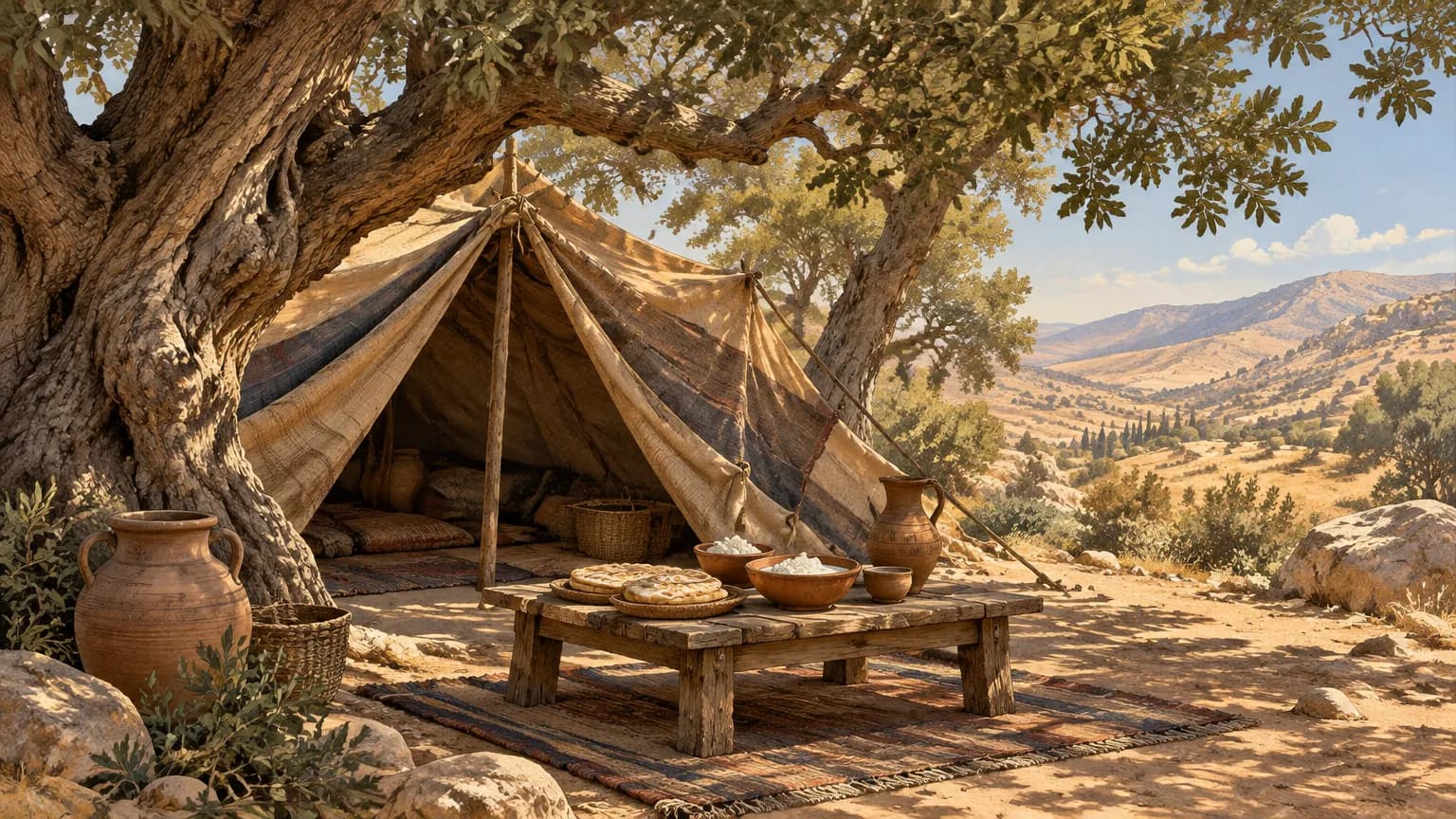
At the entrance of the tent beneath the terebinths of Mamre, bread, milk, and curds are prepared for the visitors.
Sodom's last night and Lot's rescue
Two of the visitors, now called angels, reach Sodom at evening. Lot, Avraham's nephew, insists on hosting them, but the men of the city surround his house and demand the guests. Lot offers his own daughters instead; the mob surges at him, and the angels pull him inside and strike the crowd with blinding light. Lot's sons-in-law laugh off his warning, and at dawn Lot still lingers, so the angels seize him, his wife and two daughters and drag them out. Lot pleads for the small town of Zoar as a refuge, and it is spared. Fire and sulfur fall on Sodom and Gomorrah. Lot's wife looks back and becomes a pillar of salt, and in the morning Avraham sees smoke rising like a furnace. The text then explains the whole rescue in a single phrase: God remembered Avraham and sent Lot out of the upheaval. Lot is saved for Avraham's sake, not on the strength of his own conduct. Afterward, hiding in a cave, his daughters believe the world has been destroyed, make him drunk, and conceive Moav and Ammon.
Sarah taken again, this time in Gerar
Avraham moves south to Gerar and, as he once did in Egypt, calls Sarah his sister. King Avimelech takes her. God comes to Avimelech in a dream: you will die, for she is a married woman. Avimelech protects himself much as Avraham had protected Sodom: will You slay even the innocent? God answers that He knew Avimelech's heart and kept him from touching her, and that Avraham is a prophet who will pray for him. Avimelech returns Sarah with livestock, servants and silver, and Avraham prays. Only then does the text tell us that every womb in the king's household had been closed, and now they are healed.
Yitzchak born, Yishmael sent away, a well sworn over
The very next words are: Hashem remembered Sarah, as He had said. The birth that was announced at Mamre is told directly after the prayer in Gerar. Sarah bears a son, Avraham names him Yitzchak and circumcises him on the eighth day, and Sarah declares that God has brought her laughter. At Yitzchak's weaning feast, Sarah sees Hagar's son Yishmael playing and demands that mother and son be sent away. Avraham is deeply distressed, but God tells him to listen to Sarah, since his line will continue through Yitzchak, and promises that Yishmael too will become a nation. In the wilderness the water runs out and Hagar sits apart so as not to watch the boy die. God hears the boy, and an angel shows her a well. Avraham then swears a pact with Avimelech at Beer-sheba over a disputed well and plants a tamarisk there.
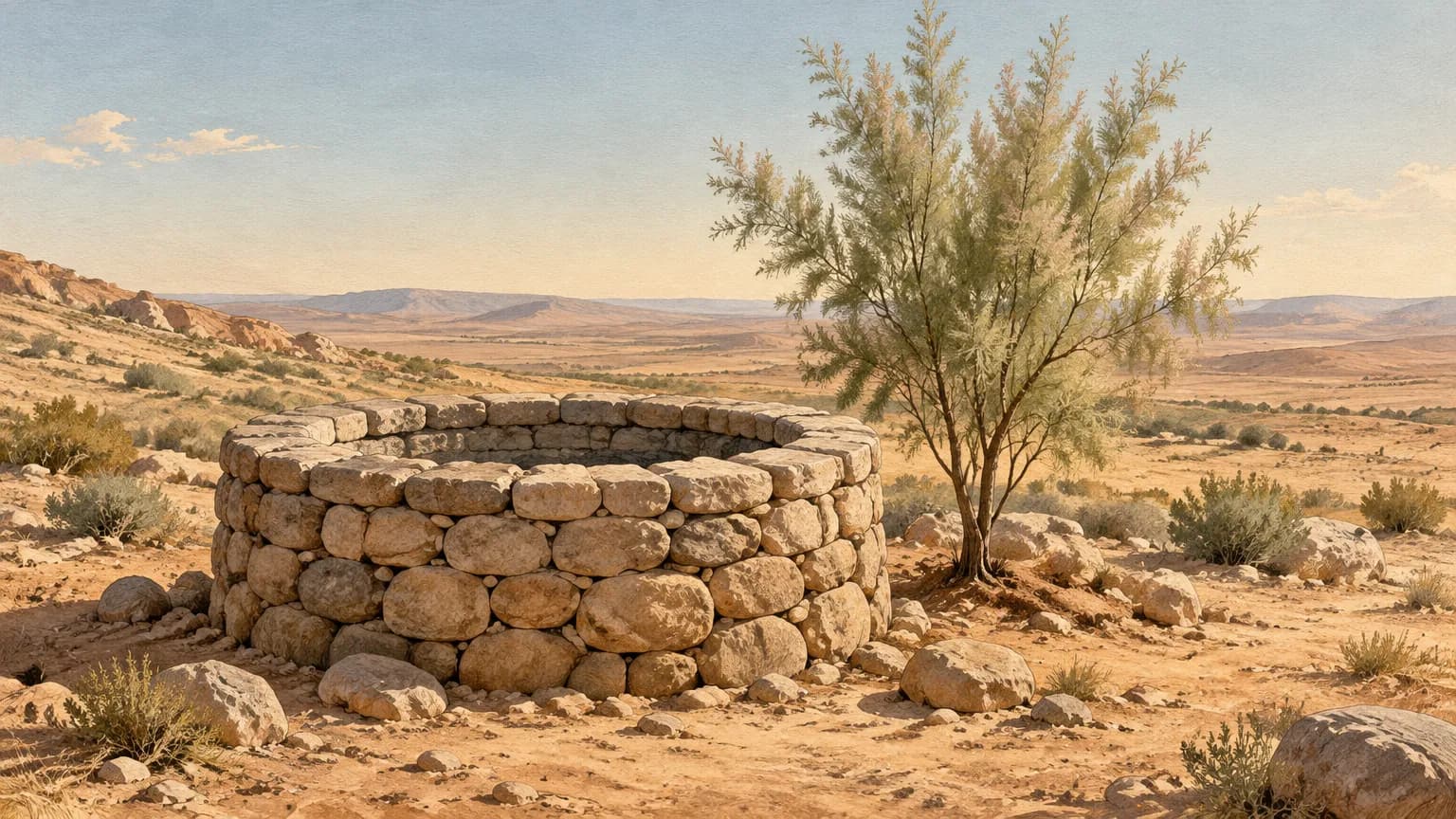
Beside the stone well at Beer-sheba where an oath was sworn, a tamarisk tree is planted in the dry soil.
The binding on Moriah and a name to remember
Then God tests Avraham: take your son, your only one, whom you love, Yitzchak, and bring him up there as an olah, an offering wholly given to God. Avraham rises early and travels three days. Yitzchak, carrying the wood, asks where the lamb is, and his father answers that God will see to it. Avraham binds him on the altar and lifts the knife, and an angel calls out to stop him. A ram caught in a thicket is offered in place of his son, the place is named "Hashem will see," and God swears to multiply Avraham's descendants like the stars. The parashah closes with news from far away: Avraham's brother Nachor has sons, and among their children is a girl named Rivkah. The story ends on a name the reader has not yet been told why to remember.
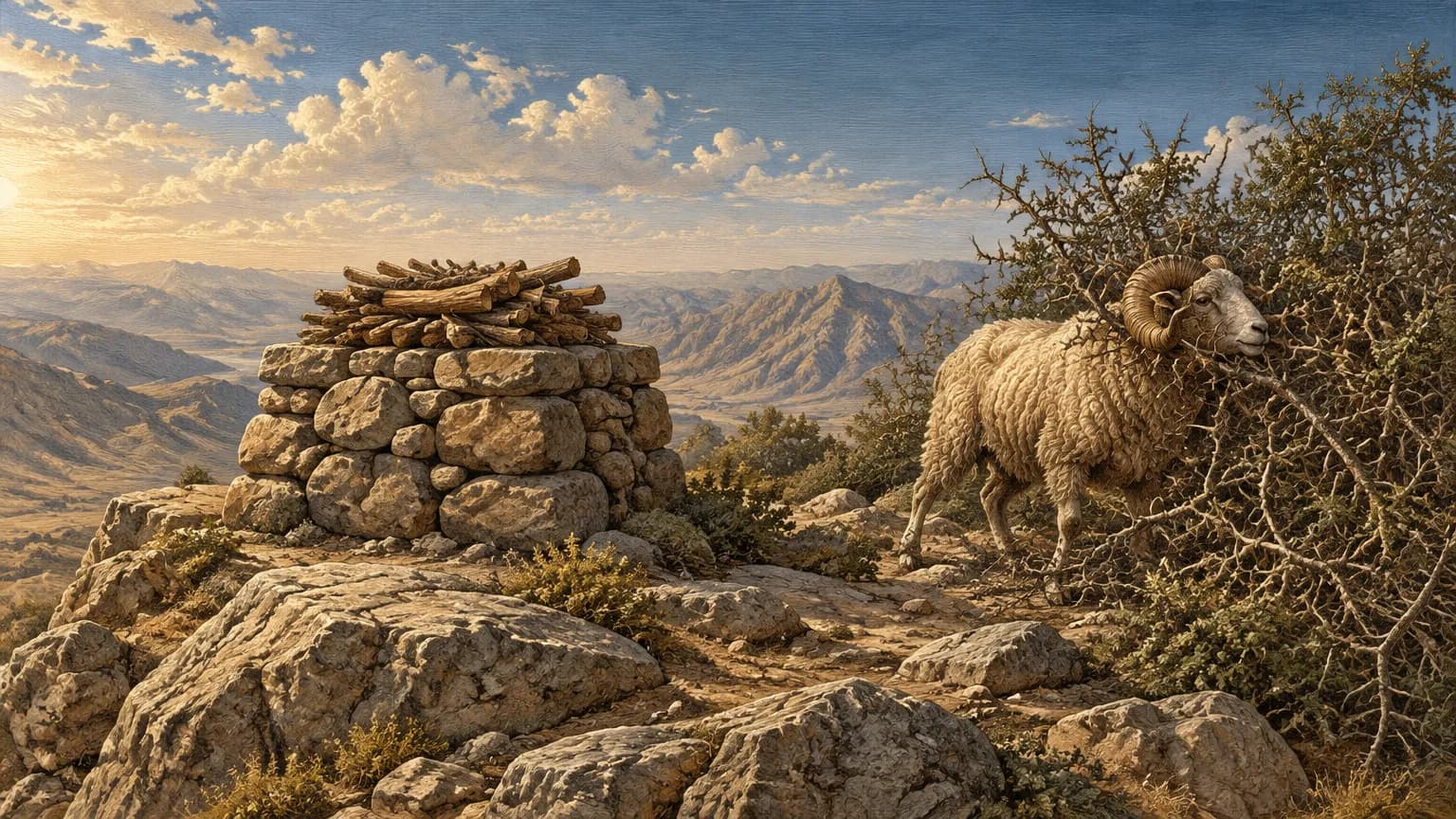
On the mountain altar laid with wood, an offering is completed when a ram is found caught in the thicket.
Generated 10/25/2026
Analysis axes
They form the central interpretive thread and appear interspersed in the essay below, connecting the parashah's sequence to a unified reading shaped by Rashi.
1.A God-sent visit in the heat of the dayאשר אני עושהRashi on 18:17
2.Laughter at Mamre, and a bargain over Sodomויזכר אלהים את אברהםRashi on 19:29
3.Sodom's last night and Lot's rescueוה' פקד את שרה וגו'Rashi on 21:1
4.Sarah taken again, this time in GerarוהעלהוRashi on 22:2
Interpretive Analysis4 Rashi axes at the turns of the reading
Vayera is built around two scenes in which a father is told that children are about to die. In the first, the children are the people of Sodom and the father argues. In the second, the child is his own and the father says nothing. This structural inversion governs the whole parashah. What lies between the two scenes, Lot's escape and the detour to Gerar, can look like digression, but it is the mechanism that connects them. Throughout these chapters, nothing promised to Avraham's own tent arrives directly. It reaches him only after passing through someone else's danger.
Start with why Sodom is disclosed at all. The classical reading puts these words in God's mouth: I gave him this land, and these cities are his. I called him Avraham, father of a multitude of nations. Shall I destroy the children without telling the father who loves Me? On this reading, the people of Sodom are, in the logic of the covenant, Avraham's children. His bargaining is not an outsider's interference in heavenly justice. It is what fatherhood of the nations means in practice. The name he received a chapter earlier as a promise about his own descendants turns out first to bind him to people who are not his descendants at all, and worse, to a city that has earned its destruction. He speaks as "dust and ashes," yet he speaks for them.
Lot's rescue runs on the same current, and here a small phrase does a great deal of work. "God remembered Avraham" seems to say only that Lot was spared as a relative. The classical reading asks what Avraham has to do with it and answers precisely. In Egypt, when Avraham called Sarah his sister, Lot knew the truth and kept silent, sparing his uncle. The single strand of merit Lot carries out of the fire is an act of guarding Avraham's household at its most exposed moment. Lot is not saved by his hospitality, which nearly cost him his daughters, nor by his promptness, since he had to be dragged out. He is saved by having once protected someone vulnerable.
That is why Gerar is no digression. It replays the Egyptian scenario exactly: the sister claim, the endangered wife, the foreign king. Now it is Avimelech who echoes Avraham's Sodom plea: will You slay even the innocent? Avraham, the prophet, prays for a royal household whose wombs have been closed, a household suffering the very barrenness that has marked his own tent for decades. Immediately after comes "Hashem remembered Sarah." The classical reading treats the placement as deliberate: whoever asks mercy for another while needing that same thing is answered first. The child announced at Mamre is delivered through the door of a stranger's palace. The promise was already sworn, but its timing is bound to an act of prayer for others.
Then comes Moriah, and the inversion. The man who bargained six times for Sodom does not bargain once for Yitzchak. The decisive detail is a single verb. God does not say "slaughter him." He says "bring him up," vehaalehu, as an olah. The classical reading makes God's halt at the altar a clarification rather than a reversal: I never told you to slay him, only to bring him up. You have brought him up; now bring him down. The command was always one of elevation. Avraham had trusted the Judge of all the earth to deal justly with strangers, and now he trusts that same Judge with his son. "God will see to the lamb" is no evasion. It is the same faith pointed inward, held in silence. The ram offered "in place of his son" completes the pattern. Even here, Avraham's own child survives because something else stands in the place of danger.
The easier reading treats the Akedah as the moment Avraham's moral voice is overruled, the advocate of Sodom turned into an obedient executioner. The parashah's structure refuses that reading. The man who argues and the man who binds are one and the same, and he never once pleads for himself in any of these chapters, not at Sodom, not in Gerar, not on the mountain. His speech is always for others, while his own future is left in God's hands. Bereshit is in this sense a book about how a family becomes a blessing. Its line is not secured by holding tight. It passes through Lot, through Avimelech's wives, and through a ram in a thicket.
The parashah's last word belongs not to the tent at Beer-sheba but to a distant household in Aram, where Nachor's family has quietly produced Rivkah. The wife who will carry Yitzchak's line forward is already growing up outside Avraham's tent. Whether the covenant can ever be secured from within, or must always be received from beyond its own walls, is a question the next chapters will put to his son.
Generated 10/25/2026
Behind humble closed doors, the quiet offerings of empty vessels and devoted hospitality become sanctuaries where divine grace steadily multiplies life, pays mortal debts, and awakens what was cold.
Context
This Haftarah comes from Melachim Bet, the second book of Kings, which records the history of the kingdoms of Bnei Yisrael. Its central figure is Elisha, disciple and successor of Eliyahu. He prophesied in Malchut Yisrael, the northern kingdom, in the ninth century BCE, during the years of the house of Achav. Only a short time before, God's prophets had been hunted by Izevel, Achav's idolatrous queen.
The passage tells two stories of Elisha's wonders. Both center on women whose households stand at the edge of ruin, and both turn on a closed door behind which God acts. It is read with Parashat Vayera, where Sarah too is promised a son, and the sages draw out that echo themselves.
Interpretation
The Haftarah Explained
The widow's husband, the sages teach, was Ovadiah, the God-fearing steward of Achav's palace. When Izevel sought to kill the prophets, he hid two hundred of them in a cave. To feed them he borrowed from Yehoram, Achav's son, who charged him heavy interest. For this Yehoram was later struck in his hands, the very hands that took it. So grave is that sin that when Yechezkel revived the dead, one man alone would not rise, because he had lent to Jews at interest. Now Ovadiah has died, and Yehoram comes to seize his two sons as slaves.
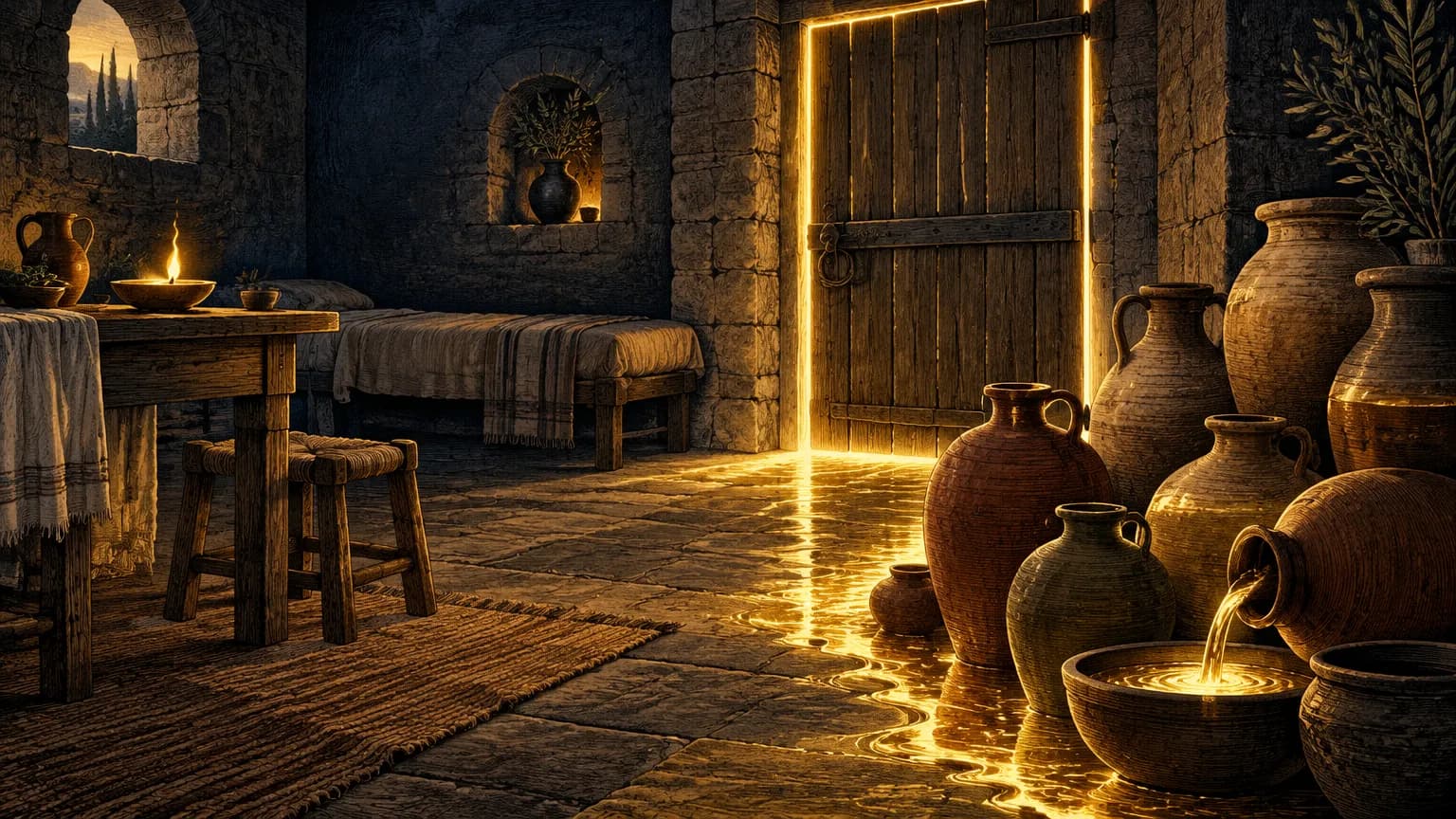
Elisha asks what she has in the house, and the answer is only a small jug with a little oil. He tells her to borrow empty vessels and shut the door, out of reverence for the miracle, which cannot happen before watching eyes. Each filled vessel is moved aside, but the original jug must stay where it is, like a wellspring that cannot be moved. When the vessels ran out, she told her son to gather the broken shards. The God who filled empty vessels could make broken ones whole, and so He did. The oil stopped only when the boy said, "There are no more vessels." When she asked whether to wait for prices to rise, Elisha told her to sell now: there would be enough to pay her debt and to live.
In Shunem lives a wealthy woman, a sister of Avishag, the maiden who served King David. She tells her husband she knows Elisha is holy: no fly lands on his table, and his bed is never defiled. They build him an upper chamber with a bed, a table, a chair and a lamp. Through Gechazi, his servant, Elisha offers to speak on her behalf to the king. She answers that she dwells among her own family, who would speak for her. Gechazi then observes that she has no son, and her husband is so old he could die any day. When Elisha promises a child, she pleads, "do not delude your maidservant." She means: do not give me a gift that will not last, a son who will soon die.
Her fear comes true. The boy cries "my head, my head!" in the field and dies on her lap at noon. She lays him on the prophet's bed and asks her husband for a donkey without revealing why. He wonders at the trip, since it is neither Shabbat nor Rosh Chodesh, the new moon, when people would visit the prophet. She answers only, "It's all right." At Har HaCarmel she clasps Elisha's feet. Gechazi thinks this disrespectful, but Elisha replies that God had hidden her grief from him until that moment. He sends Gechazi with his staff. Gechazi mocks it, asking everyone he meets whether a staff can revive the dead, and nothing happens. Elisha himself comes, shuts the door and prays. He stretches over the child, mouth to mouth and eyes to eyes, until the boy grows warm, sneezes seven times and opens his eyes.
Interpretation
Message
The sages teach that the child lived again through the merit of his mother's tzedakah, the generous honor she showed the prophet. In the same way, the dead will rise in the days of Mashiach through the merit of charity. They learn from her words that a woman perceives the worth of her guests better than her husband. Whoever hosts a Torah scholar and gives him food and drink is like one who brings the tamid, the daily offering in the Beit HaMikdash, for the verse says he came "regularly," tamid. Even the furnishings carry meaning. Mitah, shulchan, kisei and ner, the bed, table, chair and lamp, spell Mishkan, because a home that welcomes guests becomes a dwelling place for the Shechinah, God's indwelling presence. Unlike the angel who promised Sarah a son, Elisha was mortal and spoke with care. Yet his promise, too, came to pass.
A jug of oil, a small upper room and a door closed in prayer: through such humble things, God fills what is empty and restores what was lost.