Context
This Haftarah is drawn from the opening chapters of Sefer Yirmiyahu, the prophecies of Yirmiyahu, prophet in the final generations of the kingdom of Yehudah. He was descended from a family of kohanim in Anatot and began prophesying in the days of Yoshiyahu the son of Amon, king of Yehudah, continuing into the reign of Yehoyakim his son.
Yirmiyahu was appointed to speak far more words of rebuke than of comfort, and this passage is among his sharpest. It follows immediately upon God's recollection of Israel's early devotion, its bridal love in the wilderness, and now turns to indict the generations that abandoned that love once they entered the good land.
The Haftarah Explained
The prophet summons the whole House of Yaakov to hear God's grievance. "What wrong did your fathers find in Me," God asks, that they served foreign gods once they came to the land of Israel? They never paused to ask where was the God who took them out of Egypt and led them through a wilderness where nothing grew and no man had ever traveled. God brought them into a land of good fruit, and they defiled it with the worship of foreign gods. Even the kohanim did not ask where God was, the scholars did not teach the Torah, and the people followed false prophets who uttered false prophecies.
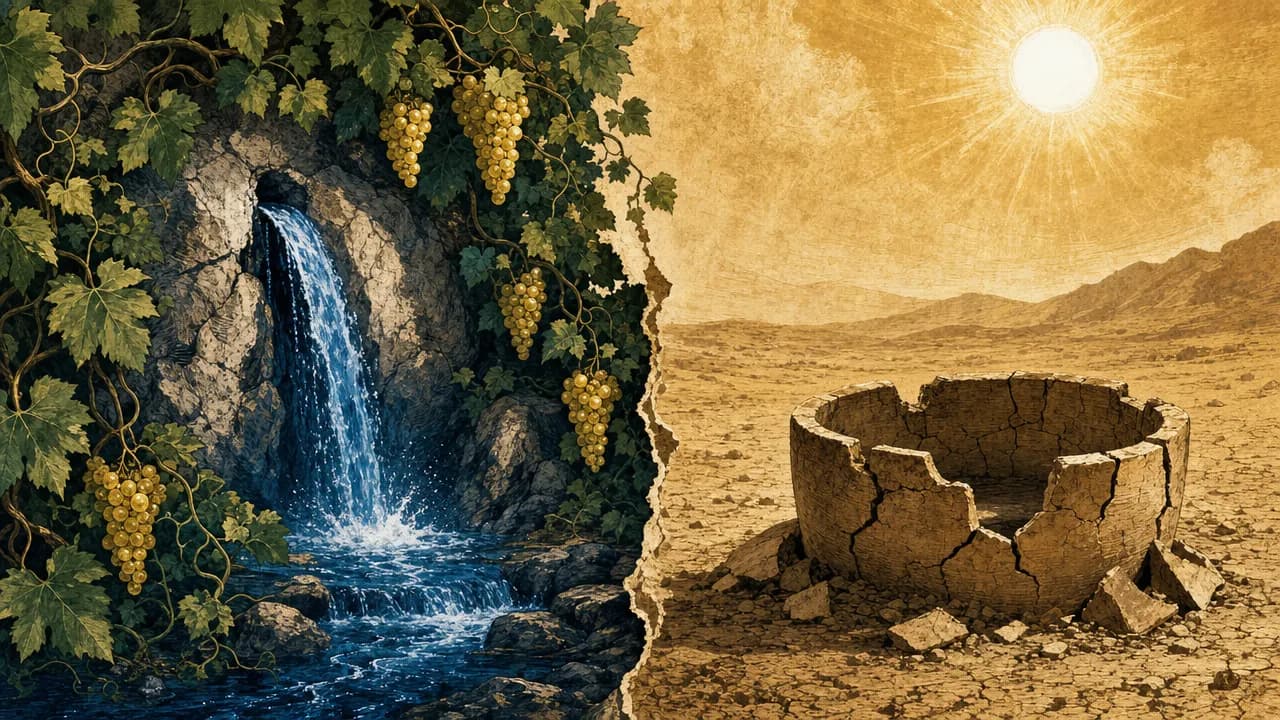
God calls the people to look to the far nations, the Kittim and Kedar, and see something astonishing: even those who bow to water or to fire, who know full well their gods are nothing and cannot help them, do not exchange them. Yet Israel, who had a true God, traded Him away for what is nothing. It would be fitting, God says, for the very heavens to be appalled at such a thing. The people committed a twofold wrong: to leave one god for another would be a single error, but they abandoned the eternal fountain that never ceases to flow for a broken cistern, a river that dries up at the first touch of heat.
Why then, the prophet asks, has Israel, called God's firstborn son, become so humbled and ashamed, with lions roaring over him and his cities left desolate? Even Noph and Tahpanhes, the Egyptian cities Israel relied upon for help, will bash in his head. All this is the price of forsaking the God who taught him the right way. What use is it to drink the waters of the Nile or the Euphrates, to seek help from Egypt or Assyria that can do no good? Their own misfortunes ought to reprove them.
God recalls how He broke Israel's yoke in Egypt, and how Israel promised to remain faithful yet turned instead, on every high hill and under every tree, to foreign gods, like a prostitute passing from one man to the next. Planted as a noble vine from good fathers and mothers, Avraham, Yitzchak, and Yaakov and their wives, the people became the opposite. Though they wash with soap, the stain of their sins remains. How can they claim they are not defiled when their deeds near the house of Peor testify against them? They are like a wild ass of the desert who sniffs the wind after her desire, whom none can restrain.
The prophets warned them not to journey to distant nations for help, lest they tear their shoes, go barefoot, and thirst on the long road, but they answered that they loved the strangers and would follow them. So Israel is shamed like a trusted man caught in theft, more embarrassed than a habitual thief, for her kings, nobles, kohanim, and prophets were thought pious. They say to wood, "You are my father," and to stone, "You gave birth to me," turning their backs to God, yet in their pain they cry out to Him. God answers: where are the gods you made? Let them save you now, for your foreign gods have become as many as your cities.
Message
The heart of this Haftarah is the strangeness of Israel's betrayal. Even nations that know their idols are powerless remain loyal to them, yet Israel exchanged the living God, the fountain that never runs dry, for gods that are nothing. The sin is doubled because it was committed against love: a people planted as a noble vine, drawn out of Egypt and carried through a deadly wilderness, turned away from the very One who taught them the right way and sought hollow help from Egypt and Assyria instead. Our sages heard in the opening question, "What wrong did your fathers find in Me," even the smaller act of leaving the synagogue while the Torah is being read, as if to ask God what injustice one has seen that one turns away.
When the strangers cannot save and the broken cisterns hold no water, only the fountain of living waters remains, waiting for a people to turn back and ask, at last, where is God.