The Funnel of Intimacy: How Communal Boundaries Protect the Divine Whisper
The transition from military camp to sacred home reveals how strict boundaries shield the fragile, intimate whisper of divine-human relationship.
Summary
1 min
The minimalist canopy standing in an open landscape symbolizes how structured communal order and sacred vows create the quiet, protected space necessary for intimate divine revelation and unexpected promise.
The structural progression of Parashat Nasso presents a profound paradox, moving from the cold administrative mechanics of a Levite census to the whispered dialogue of divine revelation. This transition forms a deliberate funnel of intimacy. The text juxtaposes communal boundaries—such as expelling the ritually impure—with individual trials, placing the ordeal of the suspected adulteress adjacent to the ascetic vow of the nazir. These are not disjointed laws but defensive shields preserving sanctity. A minute grammatical anomaly introduces the Mishkan's dedication by reading the word for 'completed' as 'bride,' reframing the sanctuary as a marriage canopy between God and Israel. The repetitive offerings of the twelve tribal chieftains serve as identical vows of commitment. Ultimately, this vast administrative machinery exists solely to protect a fragile center: the quiet space between the cherubim where Moshe hears the Divine Voice, proving that communal order is the prerequisite for spiritual closeness.
In the haftarah, a divine messenger appears to the barren wife of Manoah to announce the birth of Shimshon. The narrative highlights the woman's profound spiritual clarity, which contrasts sharply with her husband's fear. By appearing in an open field and withholding his name, the angel demonstrates that divine deliverance often arrives through unexpected, purposeful channels, bypassing human anxieties to bring miraculous salvation.
Generated 05/24/2026
Parashah SynthesisBy topic
Parashat Nasso invites us into a wilderness camp transforming from a structured military assembly into a sacred home for the Divine Presence.
Synthesis topics
The Autoparashah methodology selected 6 topics to summarize the parashah's sequence.
The Leviim Census: Organizing the Sacred Portability
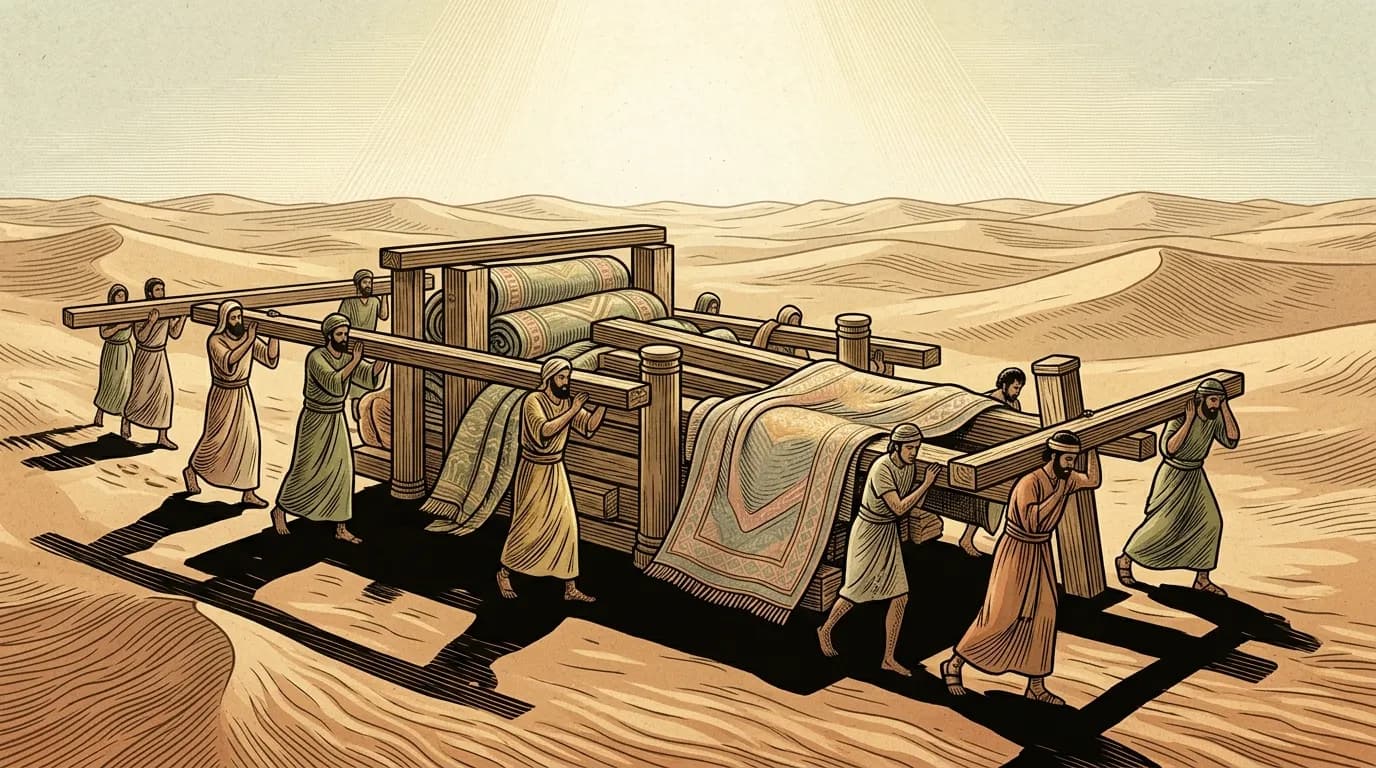
We find Bnei Yisrael in the wilderness, actively organizing their camp for the journey ahead. The focus shifts to the Leviim, specifically the clans of Gershon and Merari, completing the census of those aged thirty to fifty who will perform the physical labor of transporting the Mishkan, the portable desert sanctuary. The tone is administrative and highly detailed, establishing the precise weight of sacred responsibility assigned to each family.
The Specific Burdens: Soft Coverings and Heavy Beams
The census details the exact burdens of each family. The Gershonites carry the soft materials, including the tapestries, screens, and coverings of the Mishkan. The Merarites carry the heavy structural components, such as the wooden planks, bars, posts, and sockets. This physical labor is coordinated under the oversight of Ithamar, son of Aharon the Kohen. The Kohathites, who carry the most sacred vessels on their shoulders, are also tallied, bringing the total number of active Leviim to 8,580.
The physical labor of transporting the sanctuary's structural elements and fabrics represents the shared, structured responsibility of maintaining a dwelling place for the Divine.
Purifying the Camp: Physical Boundaries and Moral Restitution
Immediately following this physical organization, the focus shifts to the spiritual boundaries of the camp. Bnei Yisrael are commanded to send away from the camp anyone who is ritually impure due to skin disease, bodily discharge, or contact with a corpse. This ensures the physical camp remains fit for the Divine Presence dwelling in their midst. Alongside physical purity, moral integrity is demanded; laws of restitution require anyone who commits a wrong against another to confess, make full financial restitution plus an additional fifth, and bring a sacrificial ram to the Kohen.
The Ordeal of the Sotah: Resolving Domestic Rupture
The text then introduces the ritual of the sotah, a woman suspected of marital infidelity by a jealous husband when there are no witnesses. To resolve this painful domestic rupture, the husband brings his wife to the Kohen with a simple offering of barley flour. The Kohen administers an ordeal involving holy water mixed with dust from the Mishkan floor and ink from written curses. If she is guilty, the water brings physical suffering and barrenness; if innocent, she is cleared of suspicion and blessed with fertility, restoring the marital bond.
The Nazir's Vow and the Priestly Blessing: Individual Consecration
Next, the laws of the nazir, an individual who voluntarily consecrates themselves through ascetic vows, are detailed. The nazir takes a vow of self-restraint, abstaining from wine and grape products, letting their hair grow untrimmed, and avoiding contact with any corpse, even close relatives. If defiled accidentally, they must undergo a purification process and restart their term. Upon completion, they bring extensive offerings and shave their consecrated hair at the entrance of the Mishkan. Immediately following this path of individual holiness is Birkat Kohanim, the three-part priestly blessing, through which Aharon and his sons channel divine protection, grace, and peace upon Bnei Yisrael.
The priestly blessing serves as a spiritual conduit, transforming individual vows of holiness into a collective shield of divine grace, protection, and peace.
The Chieftains' Offerings: A National Dedication to the Divine Voice
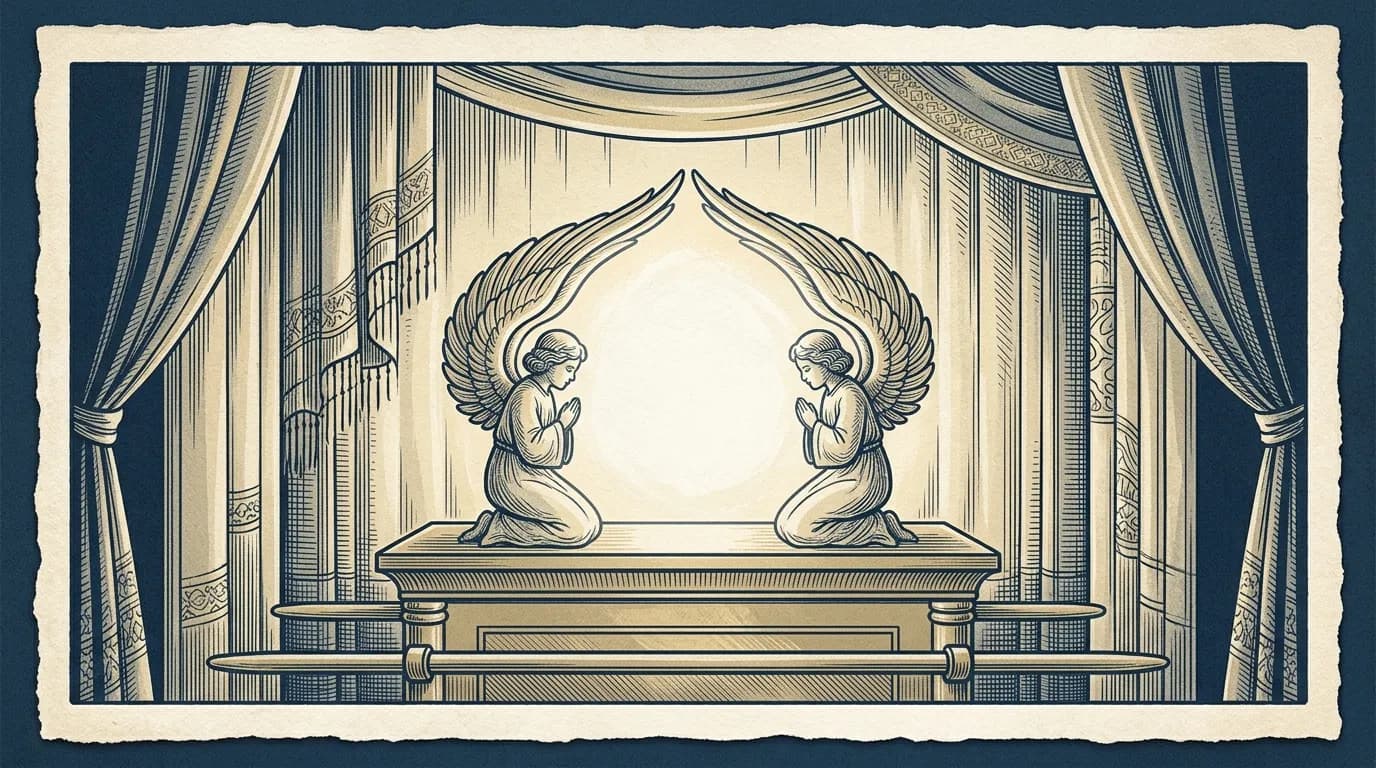
The parashah culminates in the grand dedication of the Mishkan. The chieftains of the twelve tribes bring collective gifts of transport wagons and oxen to assist the Leviim in their porterage duties. Then, over twelve consecutive days, each chieftain presents an identical, lavish offering of silver, gold, incense, and sacrificial animals. The text repeats every single detail of these twelve identical offerings, highlighting the equal devotion of each tribe. The entire epic account concludes quietly: Moshe enters the Tent of Meeting and hears the Divine Voice speaking to him from the space between the two cherubim atop Aron HaKodesh, the sacred ark holding the tablets.
The quiet voice speaking from the empty space between the cherubim demonstrates that the ultimate purpose of the sanctuary's physical grandeur is intimate, divine communication.
Generated 05/24/2026
Analysis axes
They form the central interpretive thread and appear interspersed in the essay below, connecting the parashah's sequence to a unified reading shaped by Rashi.
1.The Leviim Census: Organizing the Sacred Portabilityצו את בני ישראל וגו׳Rashi on 5:2
2.The Specific Burdens: Soft Coverings and Heavy Beamsכי יפלאRashi on 6:2
3.Purifying the Camp: Physical Boundaries and Moral Restitutionויהי ביום כלות משהRashi on 7:1
4.The Ordeal of the Sotah: Resolving Domestic Ruptureובבא משהRashi on 7:89
Interpretive Analysis4 Rashi axes at the turns of the reading
The structural progression of this text presents a profound paradox: it begins with the cold, administrative mechanics of a census and ends with the intimate, whispered dialogue of revelation. This transition is not a random assortment of laws, but a deliberate funnel of intimacy. By examining the juxtaposition of communal boundaries, individual trials, and national offerings, we find that the physical construction of the Mishkan is reframed as a marital union between God and Bnei Yisrael. The text systematically moves from the outermost physical perimeter of the camp to the innermost chamber of the heart, demonstrating that the ultimate purpose of divine law is to create a safe, bounded space where the Divine Voice can safely dwell.
This movement toward intimacy begins with an abrupt transition from the Levite census to the sudden command to expel the ritually impure from the camp. On the surface, this administrative shift seems disjointed. However, an ancient textual resolution reveals that this command was spoken on the very day the Mishkan was erected. The physical organization of the camp and the immediate demand for spiritual purity are twin requirements for hosting the Divine. The camp is not merely a military encampment; it is a sanctuary. By aligning the camp's physical boundaries with the newly descended Divine Presence, the text establishes that communal order is the prerequisite for spiritual closeness.
As the focus narrows from the community to the individual, the text places the degrading ordeal of the suspected adulteress, the sotah, immediately adjacent to the voluntary, ascetic vow of the nazir. This juxtaposition is a psychological masterstroke. The moral breakdown of marital boundaries in the sotah ritual serves as a warning of how easily human relationships can disintegrate. The text suggests that anyone who witnesses the public disgrace of infidelity should be shocked into taking a vow of wine-abstinence to guard their own personal boundaries. The self-imposed restrictions of the nazir are not an end in themselves, but a defensive shield to preserve the sanctity of the self, mirroring the communal boundaries required to preserve the sanctity of the camp.
This theme of relational fidelity culminates in the dedication of the Mishkan by the tribal chieftains. The text introduces this grand, public celebration with a striking grammatical anomaly: the word for "completed" is written defectively, allowing it to be read as "bride." This minute textual detail reorganizes our entire reading of the sanctuary's dedication. The day the Mishkan was completed was not merely an architectural milestone; it was a wedding day, with the Mishkan serving as the marriage canopy between God and Israel. The massive, repetitive offerings of the twelve chieftains—identical down to the last shekel and animal—are not dry administrative lists, but identical vows of love and commitment from each tribe to their Divine Partner.
The ultimate resolution of this marital journey occurs in the final verse, where Moshe enters the Tent of Meeting to hear the Divine Voice. This quiet climax resolves an apparent contradiction in the biblical text regarding where God speaks from—whether from the heavens, the cloud, or the tent itself. The text demonstrates that the Voice emanates from the precise, highly localized space between the two cherubim atop the ark. After pages of repetitive tribal offerings and grand national ceremonies, the parashah ends not with a public display of power, but with a quiet, whispered dialogue. The grand collective effort of the entire nation culminates in this ultimate point of contact, proving that the vast machinery of the wilderness camp exists solely to protect and facilitate this single, intimate whisper of love.
If the entire camp is structured to protect this fragile, whispered center, we are left to wonder how our own daily boundaries shield the quiet spaces of our lives.
Does the structure of our communities serve to amplify the loud, or does it carefully preserve the quiet sanctuary where the softest voice can finally be heard?
Generated 05/24/2026
The ascending flame from the rugged stone altar symbolizes how quiet faith transforms a simple offering into a vessel for divine promise and unexpected deliverance.
Context
The events of this Haftarah unfold during the period of the Shoftim, the era of judges before Israel was governed by a king. At this time, Bnei Yisrael are suffering under the oppressive rule of the Philistines. The narrative centers on a man named Manoah from the tribe of Dan, who lives in the city of Zorah, and his wife, who has been unable to conceive.
Against this backdrop of national distress and personal sorrow, a divine messenger arrives to alter the course of history. The birth of a new leader is announced not to the masses, but privately to a woman whose quiet piety makes her a vessel for deliverance.
Interpretation
The Haftarah Explained
The angel appears to the woman, promising a son who will be a nazir, an ascetic dedicated to God from the womb. The messenger warns her against wine and impure foods. This specific warning about impurity addresses a common folk remedy of the time, where barren women were advised to eat the stomach of a hare. The angel instructs her to avoid such desperate measures, assuring her that God will grant her a child without the need for these remedies.
She tells Manoah, who prays for the messenger to return. The angel appears again to the woman while she is sitting in the field. The angel deliberately appears in an open field, rather than in her home, to prevent any suspicion of impropriety. Just as Devorah, the prophetess who led Israel, judged the people under a tree in the open, the angel ensures that this righteous woman is not compromised by being alone with a strange man indoors. The woman hurries to Manoah, emphasizing that the man appeared to her in broad daylight, further dispelling any doubts.
Manoah follows his wife—a detail suggesting he was somewhat unlearned, as custom dictated he should lead. He asks the angel for instructions and offers to prepare food. The angel declines, instructing him to offer a korban, a sacrificial offering, to God instead. When Manoah asks the messenger's name, the angel replies that it is hidden, explaining that an angel's name changes depending on the specific mission they are sent to accomplish.
Manoah offers a kid on a rock. The angel draws fire from the stone, and as the flames reach toward the heavens, the messenger ascends within the fire. Terrified, Manoah fears they will die for having seen a divine being. His wife comforts him with profound logic: if God intended to kill them, He would not have accepted their offering, shown them such wonders, or promised them a son. True to the messenger's word, she gives birth to Shimshon, who grows with God's blessing, destined to fulfill the ancient prophecy that the tribe of Dan would strike the Philistines.
Interpretation
Message
The narrative highlights the profound spiritual clarity of Manoah’s wife. While Manoah reacts with fear and confusion, his wife perceives the divine will with calm rationality and unwavering faith. She understands that God’s wonders are purposeful, meant to bring life and salvation rather than destruction. Furthermore, the hidden name of the angel reminds us that divine messengers are defined entirely by their purpose. God’s deliverance often arrives in unexpected forms, bypassing conventional remedies and human expectations. True salvation requires us to look past our own anxieties, trust in the promises we are given, and recognize the divine presence working quietly in the open fields of our lives.
The birth of Shimshon teaches us that God’s greatest interventions often begin in the quiet faith of an individual. When we align ourselves with the divine will, even the most barren circumstances can give rise to miraculous deliverance.