Context
This Haftarah comes from the book of Yeshayahu, prophet in Jerusalem in the days of the kings of Yehudah, whose later chapters overflow with consolation. It is read on Shabbat Parashat Noach. Its link to the parashah lies in God's own words: just as He swore that the waters of Noah would never again cover the earth, so He swears never again to be angry with His people.
The prophet looks past the destruction toward the end of exile. He speaks to Jerusalem as a woman left alone, childless and shamed, and promises her a homecoming so complete that she will scarcely remember her grief.
The Haftarah Explained
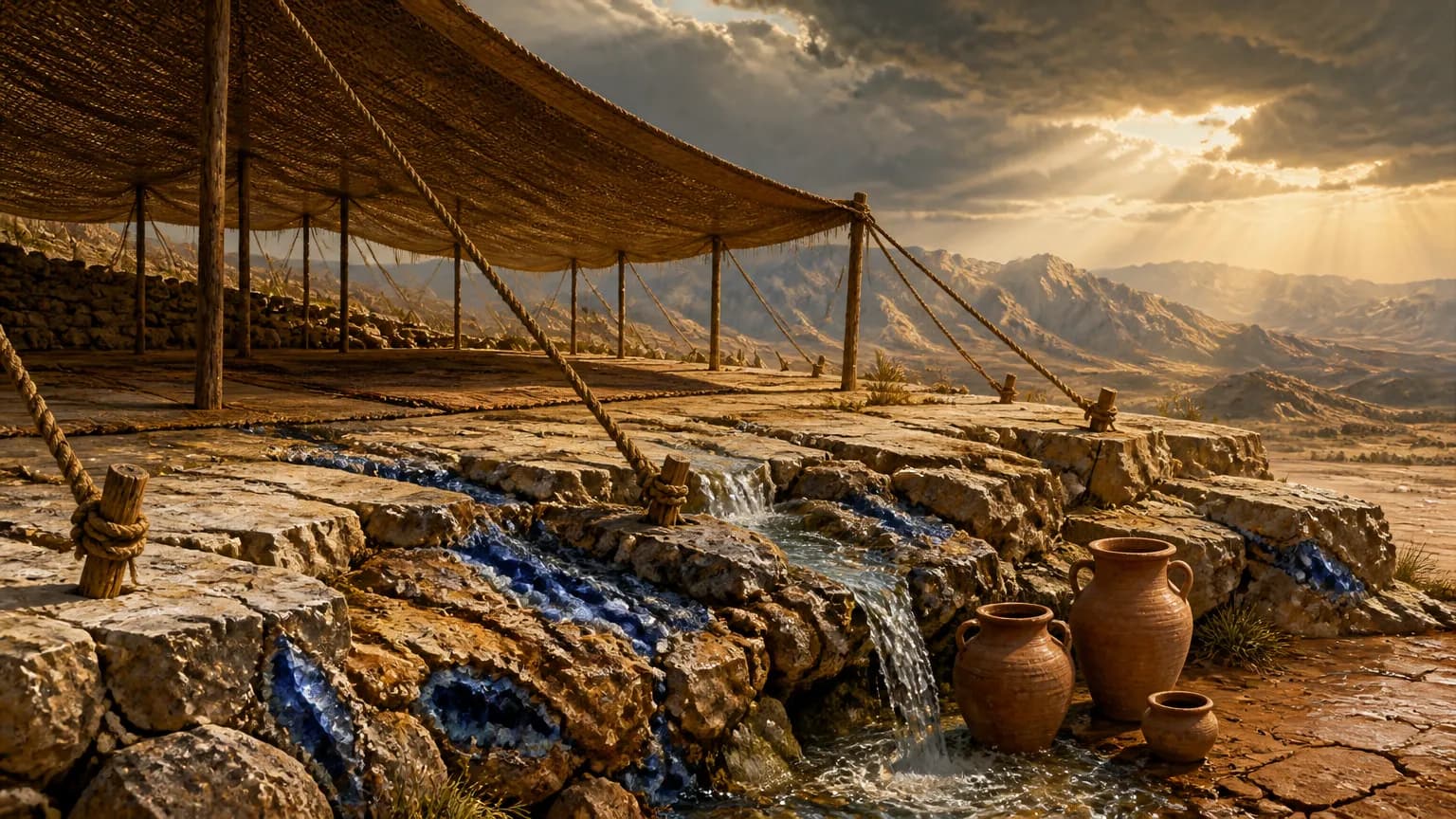
"Shout, O infertile one": in exile, Jerusalem was like a barren woman who longs for children and cannot conceive. Yet she was never a widow. She was an abandoned wife whose husband still lives. Now she is told to widen her tent, lengthen its ropes and drive its pegs firm, for her children will be many. She will spread to the south and the north, her offspring will inherit nations, and the ruined towns will again be filled with Israel.
"Fear not, you shall not be shamed." She need not dread hardship on the way out of exile. The good awaiting her will be so great that she will forget the disgrace of her youth and the shame of seeming widowed. In exile the nations ruled over her as masters. Now her Maker, the God of Hosts, is her Husband and Redeemer. Can a man cast off the wife of his youth? A wife taken in later years may come to be despised, but the bride of one's youth is loved even in old age, because her husband remembers who came to him as a young woman. So too, a woman's heart rejoices fully only with the husband who married her as a maiden. When the days of Mashiach, the anointed king of the redemption, arrive with all their goodness, the long exile will seem to have lasted only the blink of an eye. As God swore after the Flood, He swears now: the mountains may move, but His oath will never move.
To the storm-tossed, uncomforted city He promises foundations of sapphire and gates blazing with precious stones. It is told that when Rabbi Yochanan, the great sage of the Land of Israel, taught that a Temple gate would be carved from a single gem, a student scoffed. Later he was shipwrecked and saw angels in the depths of the sea cutting that very stone. It is also said that in those days gems will be so plentiful that men will mark the boundaries of their fields with them, and debtors will settle their quarrels by paying with stones from Jerusalem's streets.
"All your children shall be disciples of God." Torah learned from Moshe, a mortal man, can be forgotten. Torah learned from the Holy One Himself, Who lives forever, will never be forgotten. Israel will stand firm through tzedakah, charity and just dealing. When Gog and Magog, the hostile nations of the end of days, gather against her, God declares that He never commanded it. He created the smith who fans the coals and forges the sword, and He can break both the craftsman and the weapon.
Then comes the call: "Ho, all who are thirsty, come for water." Thirst for Torah as for water, and learn even without money. Torah is the true bread, for no one lives without it, while other wisdoms feed neither body nor soul. Water flows down from the mountain to the valley, and Torah likewise flees the arrogant. Water, wine and milk keep well only in simple earthen vessels, never in gold. Whoever listens will receive an everlasting covenant, the kindness promised to David, and distant nations will run to Israel when they hear of the wonders God has done.
Message
The Haftarah teaches that exile is not divorce. God's anger was brief, and His love is the love a man holds for the wife of his youth: rooted in memory and stronger than the years. The same oath that guards the world from another Flood guards Israel from final abandonment. The restoration is described in jewels, but its true wealth is a people who learn directly from God and come to Him as the thirsty come to water.
The forsaken wife is called home, not to a new marriage but to the first one. Her Husband remembers her youth, and His oath is as sure as the rainbow after the Flood.