Context
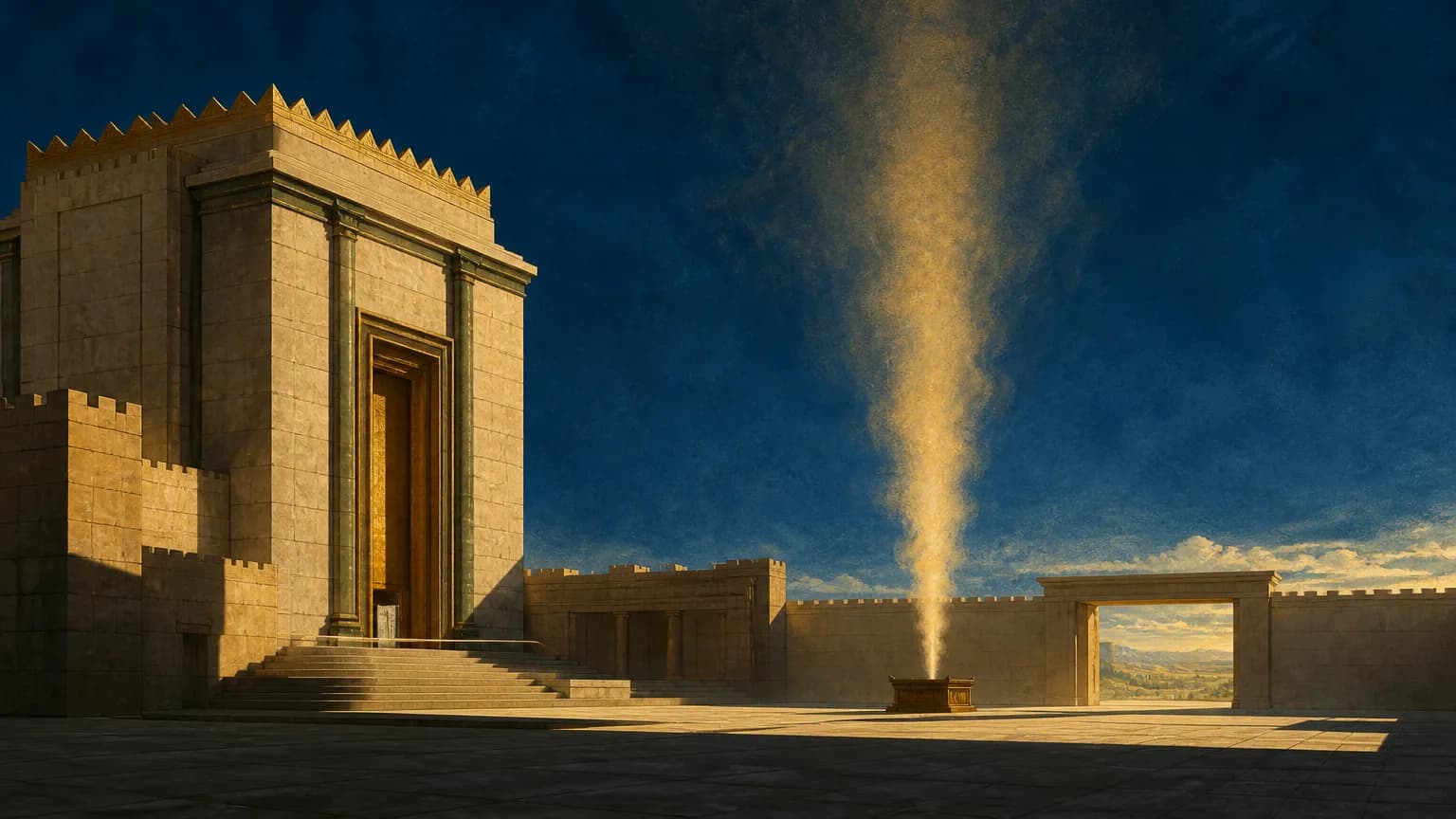
This Haftarah comes from the book of Melachim, which traces the kings of Israel from the last days of David onward. Its setting is the high point of that history: Shlomo, son of David and builder of the first Beit HaMikdash, has completed the House of God in Jerusalem and gathered all of Bnei Yisrael for its dedication.
Just before this reading begins, Shlomo offered a long and searching prayer, asking that God hear every plea directed toward this House. Our passage opens as that prayer ends. The reading fittingly belongs to Shemini Atzeret, for it closes on that very day, with the king sending the people home.
The Haftarah Explained
Shlomo had prayed on his knees before the altar, his hands spread toward heaven. From this we learn that once the king had bowed down in this prayer, he did not straighten himself until the prayer was finished. Only then did he rise, stand before the whole congregation of Israel, and bless them in a loud voice.
His blessing began with thanksgiving. God has given rest to Israel His people, exactly as He promised through Moshe Rabbeinu, and not one word of that promise has failed. From a promise kept, Shlomo drew a request: just as God was with our ancestors, so may He be with us, and may He never leave us. He asked, too, that God incline the hearts of Israel toward Him, so that they would serve Him, walk in His paths, and keep His mitzvot.
Shlomo then asked that the words of his prayer remain near to God day and night, and that God feed His people and provide all their needs. This had a purpose beyond Israel itself. When the whole world sees that God provides each person with what he needs and protects him from all evil, all the peoples of the earth will know that He alone is God. For their part, the hearts of Israel must be turned toward Him, to keep His mitzvot as they did on that day.
Then came the korbanot. The king offered, and all Israel offered with him. Shlomo slaughtered twenty-two thousand oxen and one hundred twenty thousand sheep as shelamim, the peace offerings shared in joy, and so they dedicated the House of God. The offerings were so many that the bronze altar could not hold them. On that day the king consecrated the courtyard before the House so that korbanot could be brought there as well.
The celebration lasted seven days and seven days, fourteen days in all. There were the seven days before Sukkot, given to the dedication, and the seven days of Sukkot itself. Since those first seven days included Yom Kippur, the sages discussed what took place on it. Some say the people ate of the korbanot even on Yom Kippur. Others ask how that could be, and explain that korbanot were offered on Yom Kippur but not eaten. On the eighth day, Shemini Atzeret, Shlomo sent the people away. They did not leave on the festival itself. They took their leave of the king that day and set out after it, joyful and grateful for all the good God had done for David His servant and for Israel His people. That good was the building of His House, which Shlomo had so longed for.
Message
The passage moves from prayer to blessing, and from blessing to joy. Shlomo's confidence rests on a single fact: God kept His word to Moshe, and not a word of it failed. Because the past promise was fulfilled, Israel can ask for the future with trust. They ask for God's presence, for hearts turned toward Him, and for daily sustenance. Even their daily bread becomes a testimony, since the world will know God through the way He provides for His people. The people return home not simply fed and rested but glad of heart, for they have seen the longing of David and Shlomo fulfilled in a House built for God's Name.
A promise kept became a blessing spoken, and a blessing spoken became a nation's joy, carried home from the courtyards of the Beit HaMikdash on Shemini Atzeret.