Context
This Haftarah comes from the book of Hoshea, the prophet who spoke to Malchut Yisrael, the northern kingdom, in its final generations. Its kings had set up golden calves for the people to worship, and the power of Ashur, the Assyrian empire to the east, was rising against it. Hoshea often calls the whole kingdom by the name of its leading tribe, Ephraim.
The passage opens with Yaakov fleeing to Aram, which links it to the Torah reading about Yaakov's years with Lavan. From that memory the prophet traces a long account of divine care and human ingratitude.
The Haftarah Explained
God begins by recalling how He guarded Yaakov. Yaakov overcame the angel who wrestled with him and fled to Aram, where he served for a wife and tended Lavan's sheep to earn her. God then did still more kindness for Yaakov's children. When they endured bitter labor in Egypt, He sent them a prophet, Moshe Rabbeinu, who brought them out. Through that prophet He protected them for forty years in the wilderness and gave them food to eat.
Yet Ephraim gave bitter offense. He shamed God's prophets and led Israel to worship false gods, and the blood he caused to be shed will return upon his own head. There was a time when Ephraim stood exalted. When he spoke, all Israel trembled and listened. Once he served Baal, the Canaanite idol, he was as good as dead. The sins only multiplied. They cast silver images with great skill, and the priests of the calves taught that a man who brought a costly offering, even slaughtering his own child, was worthy to kiss the calf. Such a people will vanish like a morning cloud, like early dew, like chaff whirled from the threshing floor, like smoke drifting from a window.
God reminds them that He alone has been their God since Egypt and that He knew them in a dry land where nothing grows. When they entered the Land and found good pasture, fruit and wine, they grew full and proud, and they forgot Him. So He will become to them like a lion and a leopard lurking on the road, which means He will hand them over to Ashur. Like a bear robbed of her cubs He will tear open the locked heart that refuses to understand that He is God. Israel has destroyed itself by not relying on His help.
"Where now is your king?" God is the eternal King, yet the people asked for a human one. He gave them Shaul in His anger and took him away in His wrath, when Shaul fell to the Pelishtim in battle. Ephraim's sin is bound up and stored away for repayment. Troubles will come on him like a woman's pangs in childbirth. He is a foolish son: he saw his fathers sin and suffer and still did not return. Had he been wise even for a moment, he would not have come to that place of anguish.
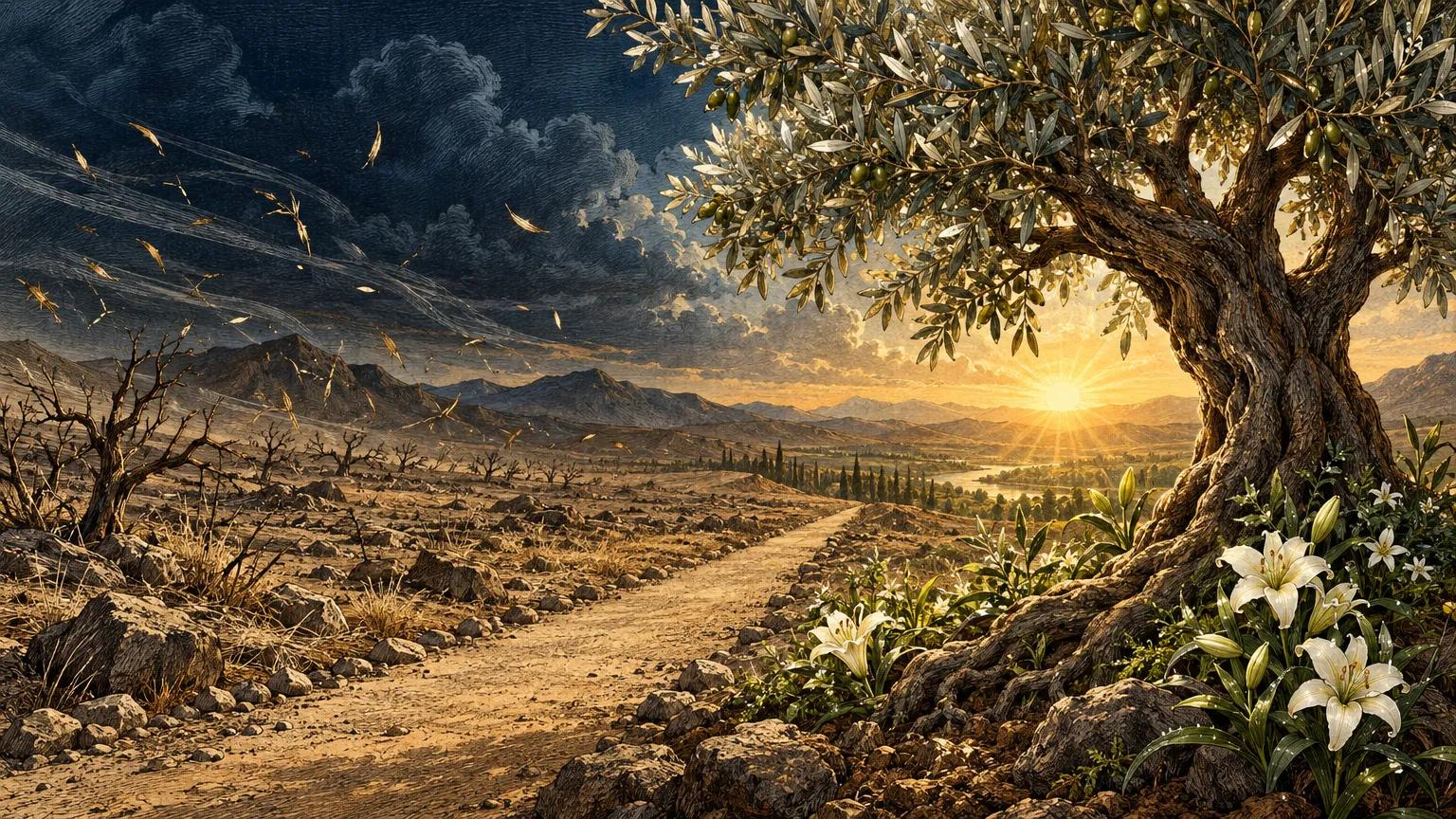
God once redeemed them from the grave, but now He speaks words of death, and His compassion is hidden from His eyes. Ephraim had flourished among his brothers, as Yaakov foretold when he set the younger above Menasheh. Now an east wind, a blast from God, will come. This is the king of Ashur, roused by God from the wilderness to the east, who will dry up every spring and plunder every treasure. Shomron, Ephraim's finest city, will fall to the sword, and even its infants and women with child will not be spared. Then the prophet calls, "Return, O Israel," and teaches the people what to say: forgive all guilt, accept our words instead of bulls, Ashur will not save us, and never again will we call our handiwork our god. God answers that He will heal them and love them freely. He will be like dew to Israel, and Israel will blossom like the lily and spread like the olive tree.
Message
The Haftarah sets God's faithfulness beside Israel's forgetfulness. Every protection, from Yaakov in Aram to the manna in the wilderness, came from Him. The fall came when abundance bred pride and the people sought help from idols, kings and empires. Yet the same God who guards the sin stored away also teaches the words of teshuvah, the return to God. The road back is not hidden. In the prophet's closing words, the paths of God are smooth: the righteous walk on them, and sinners stumble.
Ephraim will one day ask, "What more have I to do with idols?" The wise will take these words to heart and walk the straight paths of God.