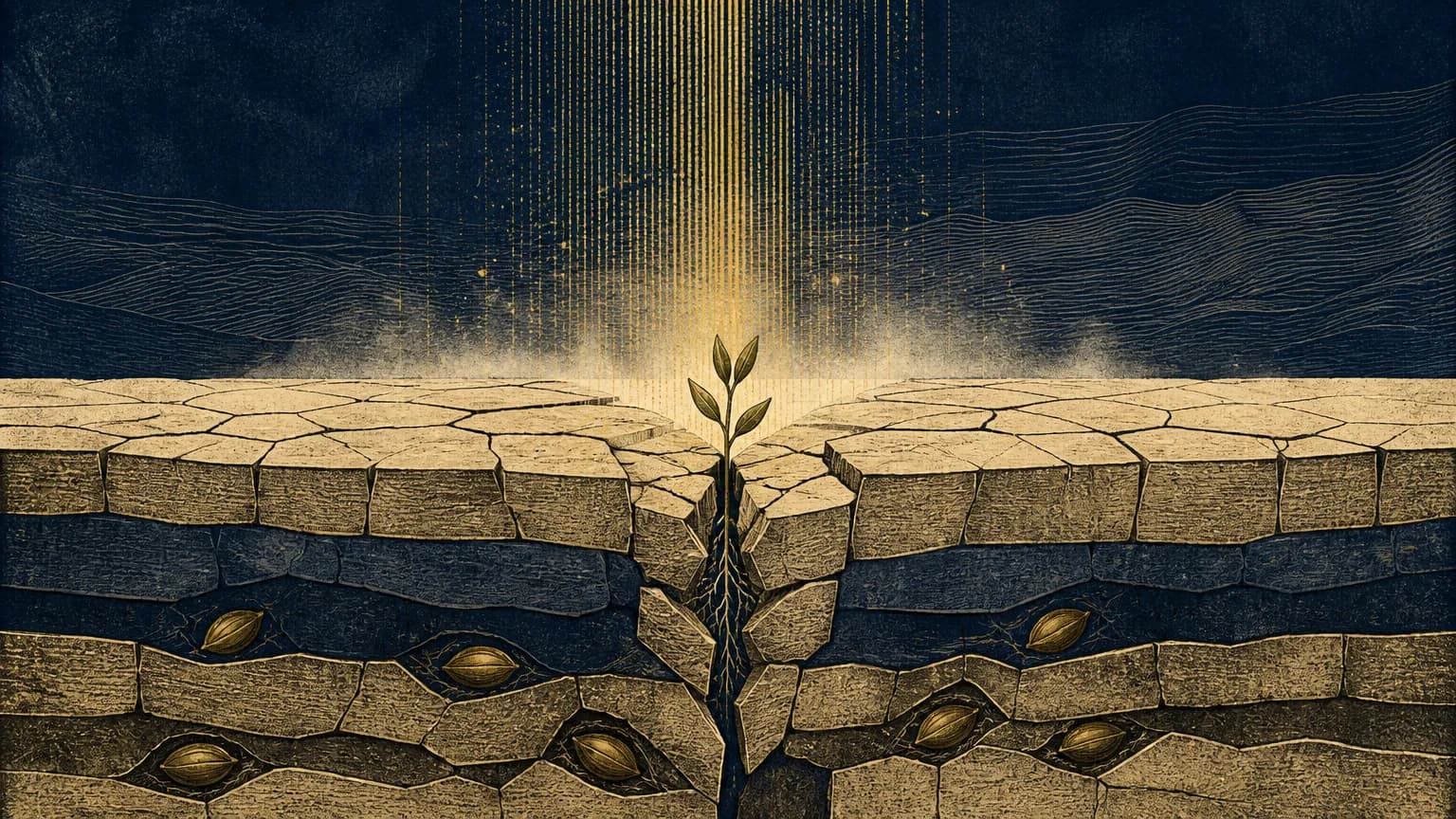
Bereshit, the Torah's opening portion, moves from the creation of the world to the eve of Noah's flood. Its first account calls God only Elokim, the Name associated with judgment, while the second telling of soil, breath and garden switches to Hashem Elokim, adding the personal Name associated with mercy. A classical commentary reads this shift closely: a world under strict justice alone could not endure, so God joined mercy to it, and that mercy enters the text together with the human being who must carry it. Two moments show the human roles mercy depends on, prayer and self-mastery. Plants created on the third day stay beneath the ground until Adam, recognizing the need, prays for rain. Later God warns Cain, the first son, that sin crouches at his door yet he can master it; Cain instead kills his brother Abel. By the close both roles have failed. The human heart is evil all the time, and it is Hashem, the Name of mercy, who regrets making humankind. Mercy is not defeated but narrowed, and the portion ends as Noah alone finds favor with Hashem.
In the haftarah, read when the new moon falls on a Sunday, Yehonatan, son and heir of King Shaul, shields his friend David, whom Shaul wants dead. At the new-moon feast, Shaul's fury and the spear he hurls at his own son confirm the danger, and Yehonatan signals with three arrows that David must flee. They part bound by an oath before God that extends to their descendants.